Altered Carbon · The world of the novels
The Protectorate
Stacks and sleeves, needlecast and the Envoys, the vanished Martians and the oceans of Harlan’s World.
Richard K. Morgan’s three Takeshi Kovacs novels — Altered Carbon (2002), Broken Angels (2003) and Woken Furies (2005) — share one universe, some centuries from now. Humanity has spread to a few dozen worlds by following the maps of a vanished alien race, is governed from Earth by the United Nations Protectorate, and is held together by one technology: every mind lives on a cortical stack, the body is a sleeve, and death, for anyone who can pay, is negotiable.
Each book visits a different world — Earth, the war on Sanction IV, Kovacs’s home planet of Harlan’s World — and each adds a layer: the Meths and the Catholics, the Martians and their ruins, Quellcrist Falconer’s revolution. This page lays out the hardware, the institutions and the places, with the books where each one matters. Where the novels and the Netflix series part ways it follows the novels; the notes at the bottom say what the show changed.
The Stack and the Sleeve
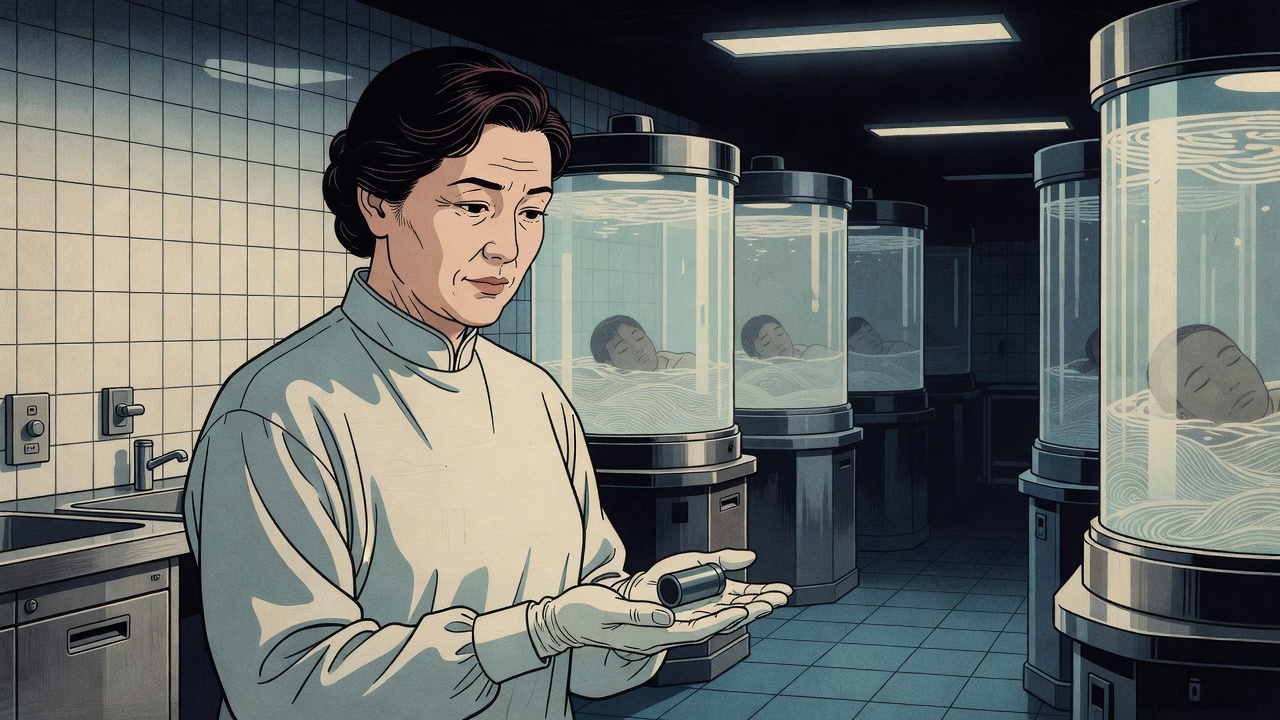
Everyone in the Protectorate carries a cortical stack: a small implant at the base of the skull, seated in the top of the spine, that holds the whole of a person — memory, habit, self — as data. The body around it is a sleeve. Bodies die; stacks usually don’t, and a stack can be loaded into a new body. That is resleeving, and Altered Carbon begins with it, Kovacs thrashing up out of a tank of gel into the wrong gravity and a stranger’s flesh:
“Coming back from the dead can be rough.”
A stack comes out with a knife, and what body it goes into next is a matter of money. The rich resleeve into clones of themselves; the poor take what they are given, or wait. In between come synthetics — cheap, hardy, a little numb, slow to bleed — and purpose-grown combat sleeves sold under brand names and fitted with neurachem, the wetware that speeds reflexes and senses. A sleeve keeps some of its past: the one Kovacs is given on Earth comes with a smoker’s lungs and a cop’s enemies.
None of it is comfortable. Kovacs, nearly two decades into a life of resleeving, is still jarred to see a total stranger in the mirror; Irene Elliott, let out into a borrowed body, says a night with her husband feels like being unfaithful; Kovacs’s father walked past his waiting family in a new face and out of their lives. Death, as Morgan put it in 2004, “suddenly ceases to be the great leveller”.
Real Death
Real death is the kind that sticks: the stack destroyed and no copy anywhere. In Altered Carbon Kovacs kills Trepp’s first sleeve with a blaster shot that takes spine and stack together, but Trepp has a backup, and days later sits down across a restaurant table from him with no memory of dying and no grudge. That is what money buys. Laurens Bancroft is copied to remote storage every forty-eight hours; shot dead at home, he wakes in a fresh clone missing only the two days since the last update, and hires Kovacs to find out what happened in them.
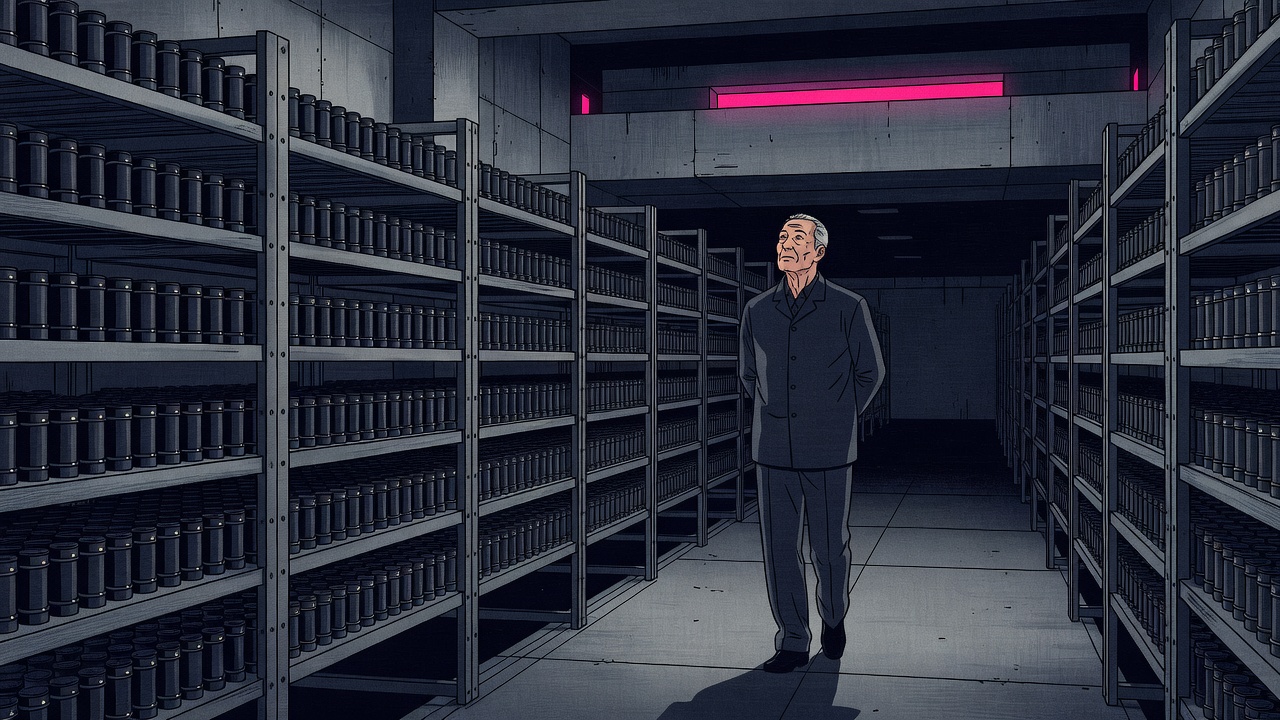
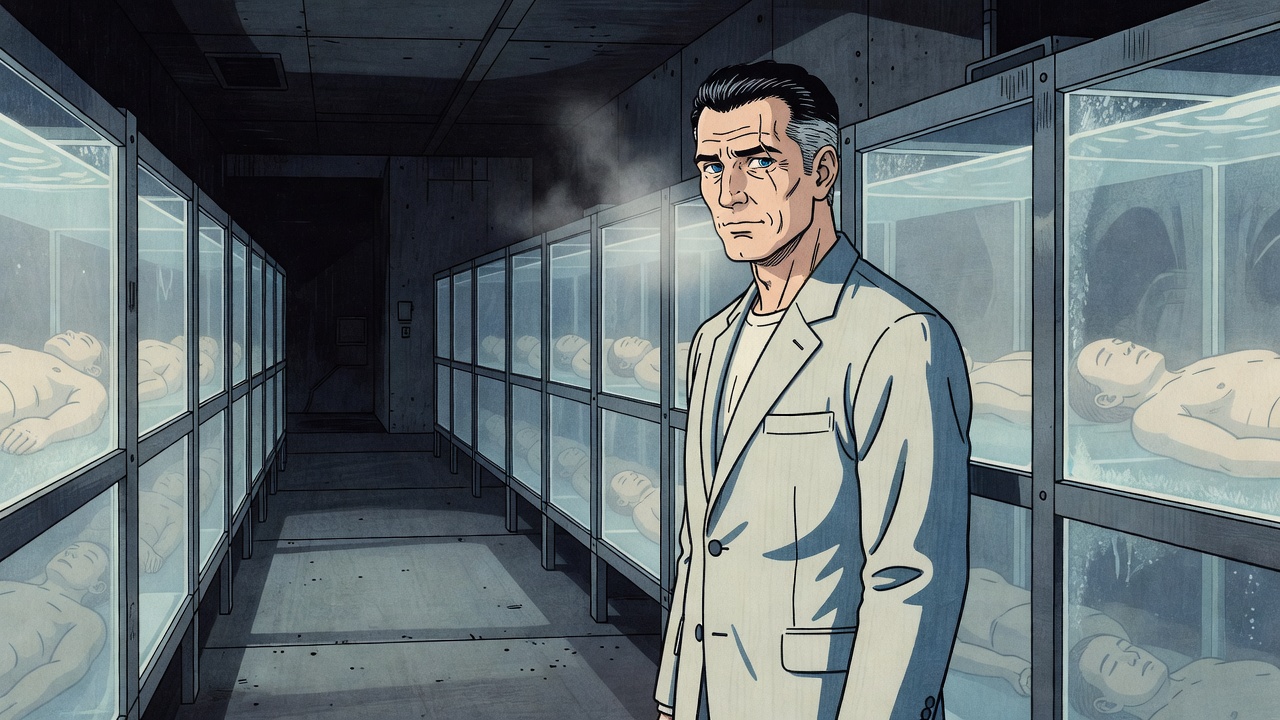
Storage is the Protectorate’s prison: the convicted wait on a shelf as stacks, for decades or centuries, while their sleeves are rented out or sold. Time does not pass on the shelf: for Kovacs, waking on Earth, his partner Sarah died last night.
Double-sleeving — one mind in two bodies at once — is a crime. The assassin Kadmin does it as a matter of course; Kovacs does it once, to go after Head in the Clouds, and his two selves settle which of them goes on existing with a game of scissors-paper-stone. In Woken Furies the crime comes back for him, when the Harlan family wake a copy of him from his Envoy days, stored for nearly two centuries, and set it hunting him.
A stack does not need a body at all. It can run in virtual, a machine-made world, for interrogation, torture, meetings or rest, and virtual time can run fast: the survivors of Broken Angels sit out an eleven-year voyage at about a hundred times real speed.
Needlecast
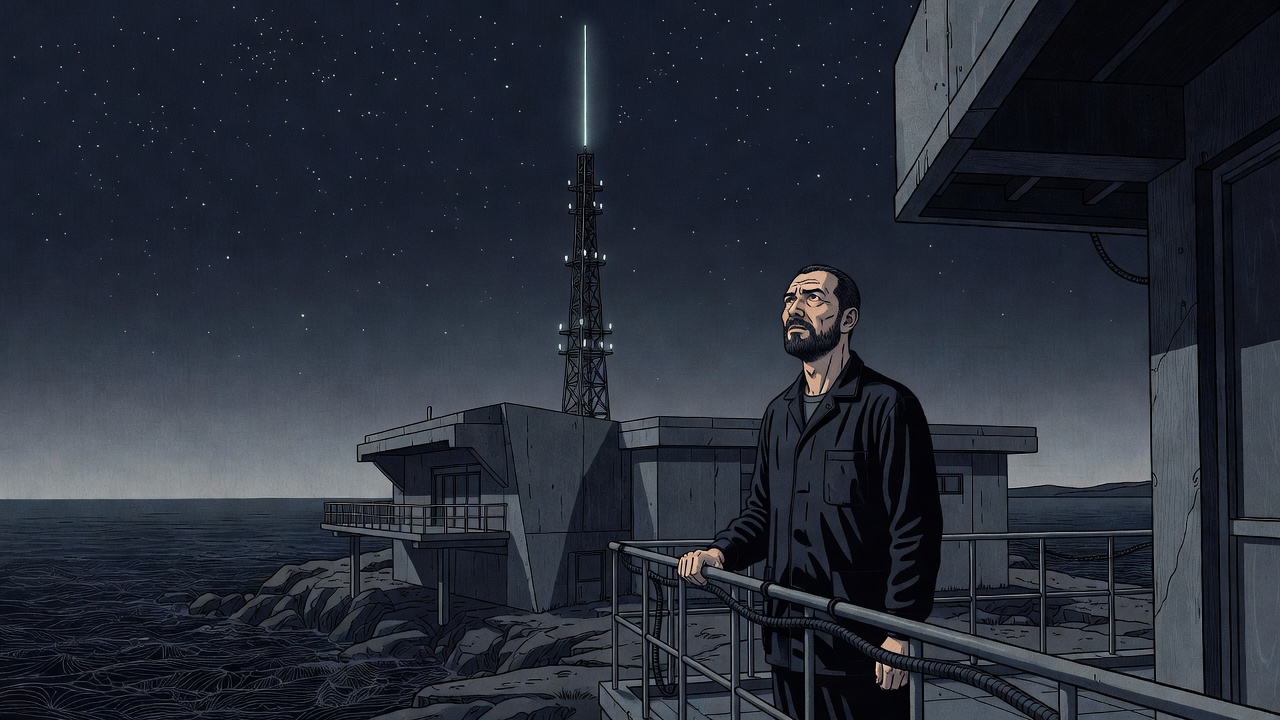
Nothing solid crosses between the stars faster than light; information does. The Protectorate’s worlds are joined by needlecast, a hyperspatial transmission, and since a stack is information, people travel by it too — as digitized human freight, D.H.F. on the paperwork. You leave your body behind and wake in whatever sleeve is waiting at the other end. That is how Kovacs reaches Earth in Altered Carbon, a hundred and eighty-odd light-years from home, and how he leaves.
For the rich it is a commute: Bancroft spends a day in Osaka by casting himself into a clone he keeps on ice there, and the Meths’ backups travel the same road — which is how Kovacs finally gets at Reileen Kawahara, through the update needlecast to her clones in Europe. On Harlan’s World, where leaving means shedding your body, those who have ridden a needlecast are treated as something like celebrities.
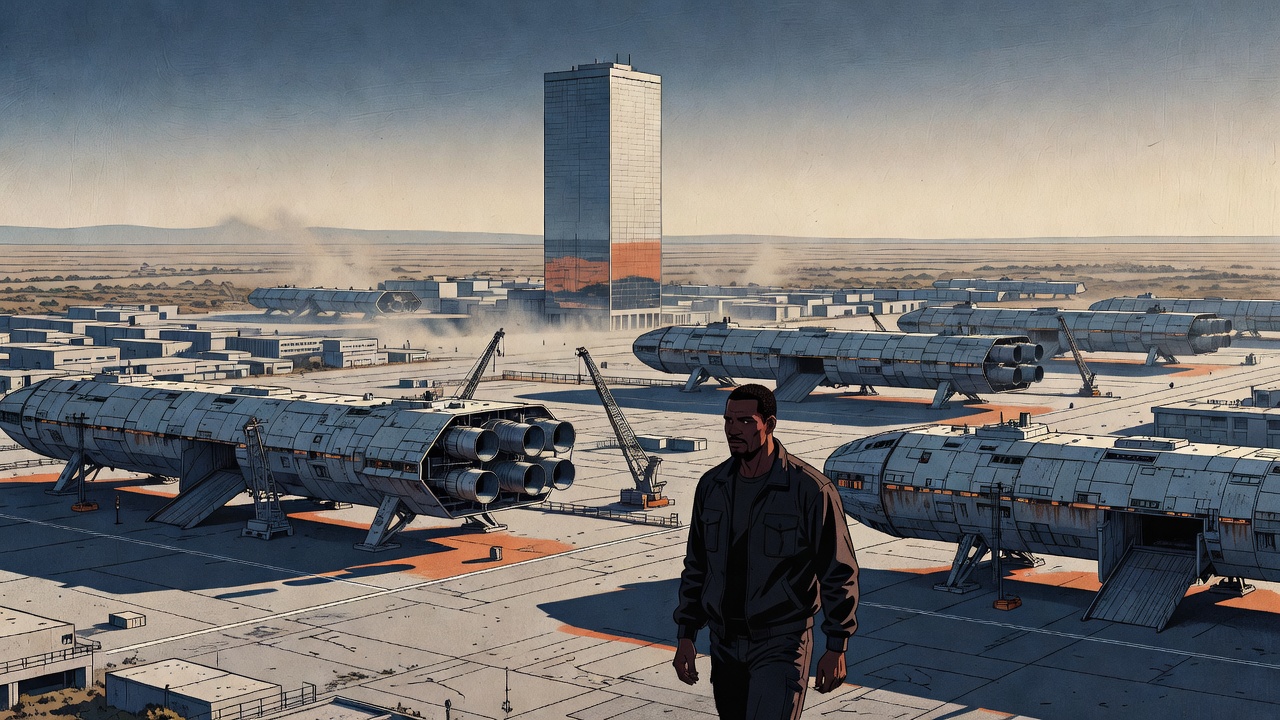
Bodies and cargo still go the slow way. Colony barges, crawling at near-light speed, carried the first settlers out to the Settled Worlds, and in Broken Angels the survivors face eleven years in transit back to the Latimer system. Minds are fast and matter is slow, and the rest of the Protectorate follows from that.
The Protectorate
All of this is governed from Earth by the United Nations Protectorate, which rules the Settled Worlds alongside corporations that span whole star systems. The worlds, about three dozen habitable planets, were found because the Martians left maps: the colony barges flew straight to places where people could live. Worlds named across the books include Earth, Harlan’s World, Sanction IV, Latimer, Adoracion, Sharya, New Beijing and Nkrumah’s Land.
The Protectorate keeps order with the Protectorate Marines — Kovacs first wore a vacuum suit with them, at eighteen — with Vacuum Command and with the Envoy Corps. Woken Furies spells out the policy: anything that looks like revolt, anywhere in the Settled Worlds, is put down, by planetary bombardment if it comes to that. Earth itself is closed to Envoy operations unless the U.N. mandates them, and on Sanction IV there is officially no Protectorate presence at all: the planetary government insists the war is an internal matter.
Its law reaches into the stack: the U.N. court is deciding Resolution 653 as Altered Carbon opens, and the chief justice of the U.N. Supreme Court watches tennis at the Bancrofts’. Morgan called the whole arrangement a model of human stupidity running out of control on an interstellar scale, and made Kovacs — slum kid, marine, Envoy, criminal — what it produces.
The Envoy Corps
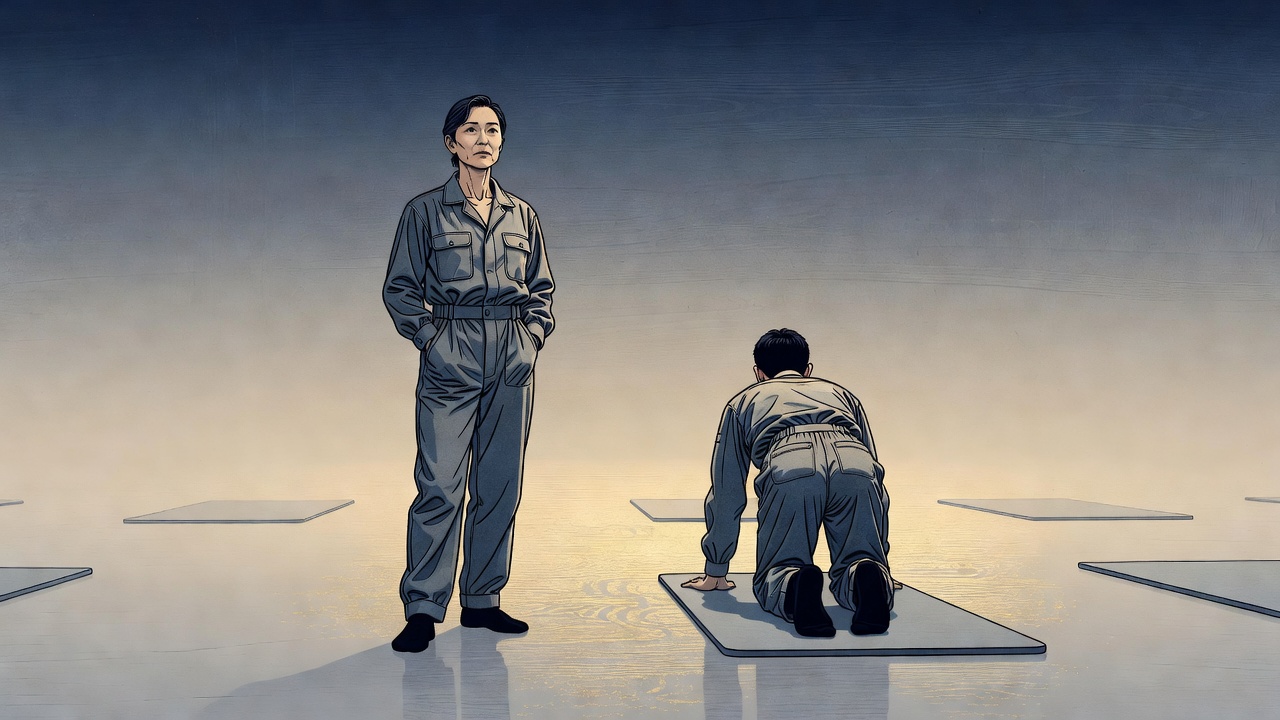
The Envoys are the Protectorate’s answer to a universe it can reach only by needlecast. An ordinary soldier cast across the light-years into a strange body on a strange world is too disoriented to fight, Morgan explained; an Envoy is conditioned, with a kind of Zen acceptance, to wake in any sleeve, anywhere, and work at once.
“Envoy conditioning carries with it total recall”
It also shuts down fear and builds Envoy intuition, the knack of making a whole picture out of scraps, which is how Kovacs cracks Altered Carbon. Envoys read faces and voices and steer people with them, and are taught that weapons are a weakness. Barred from political or corporate authority, former Envoys drift into mercenary work and crime, at which, Morgan said, they are superlatively good.
Kovacs was trained by Virginia Vidaura, whose maxims run in his head through all three books before she appears in person, a surfer and a neo-Quellist, in Woken Furies. The Corps’ disaster was Innenin, a beachhead on Sharya where a viral weapon, the Rawling virus, got into the Envoys’ minds; his friend Jimmy de Soto clawed out his own eye before he died. Kovacs left the Corps after it. In the third book the Envoys are back: a team under Todor Murakami, an old Corps contemporary, has been on Harlan’s World for four years.
The Martians
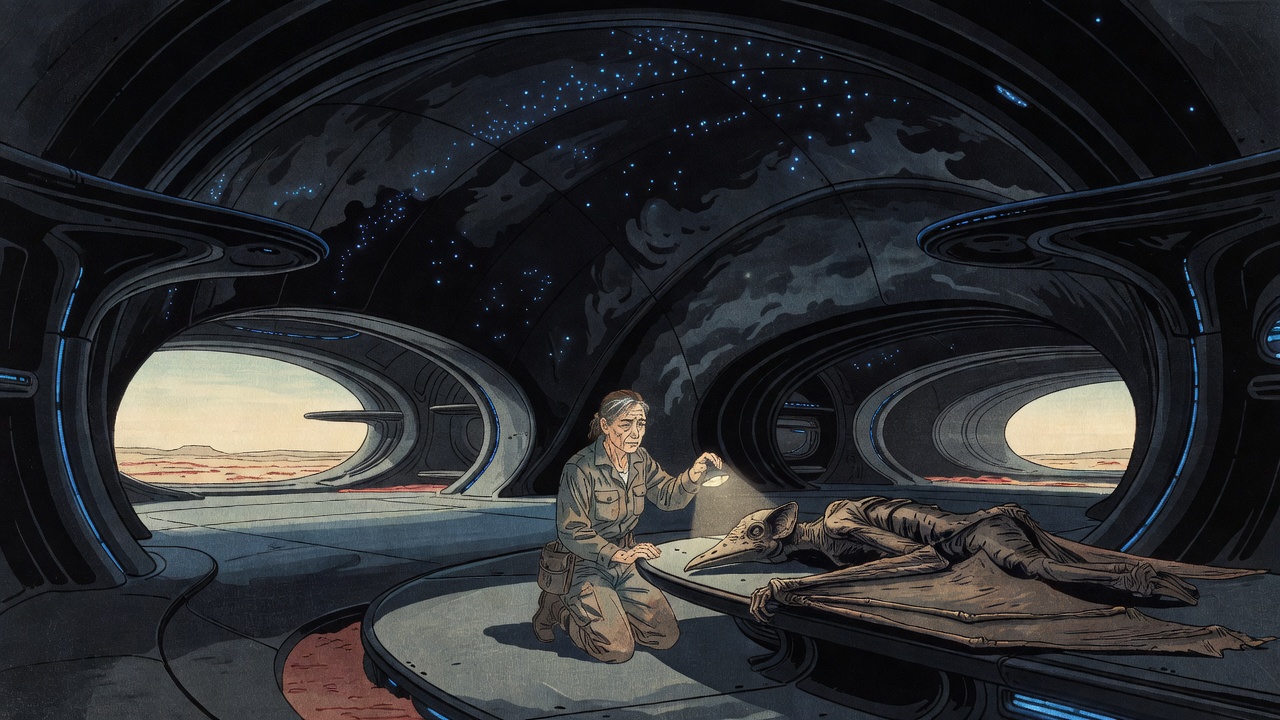
Humans did not find the way to the stars by themselves. A winged civilization crossed space long before us and vanished — round about the time, Morgan said, that humans were braining each other with flints. They are called Martians because their remains were first found on Mars, and their abandoned cities there held astrogation charts that told humanity where the habitable worlds were.
“They had wings and looked not dissimilar to very big bats.”
That is Morgan in 2005; the books are sparing with their bodies. Intact Martian dead are rare — a couple of hundred, Broken Angels says, in over four centuries of archaeology on three dozen worlds — and, Woken Furies adds, nothing resembling a cortical stack has ever been found in one: sleeving, Morgan said, is assumed to be a human invention. What survives is their building, in a black, cloud-veined alloy that feels like onyx and carries a faint static charge, shaped for winged bodies, not human ones, and covered in technoglyphs the archaeologues of the Guild still argue over.
In Altered Carbon the Martians are luxury goods: a songspire tree from Mars in the Bancrofts’ hall that sighs when touched, technoglyphs along the corridors of Head in the Clouds, a police station in what Kovacs takes for Martian Baroque. In Broken Angels a gate on a Sanction IV beach opens onto a derelict Martian warship in deep space, its mummified dead still aboard and its defences still live. In Woken Furies Martian platforms still circle Harlan’s World, and the wreck of a Martian tower that once stood over two kilometres high lies in the sea north of Millsport.
Earth
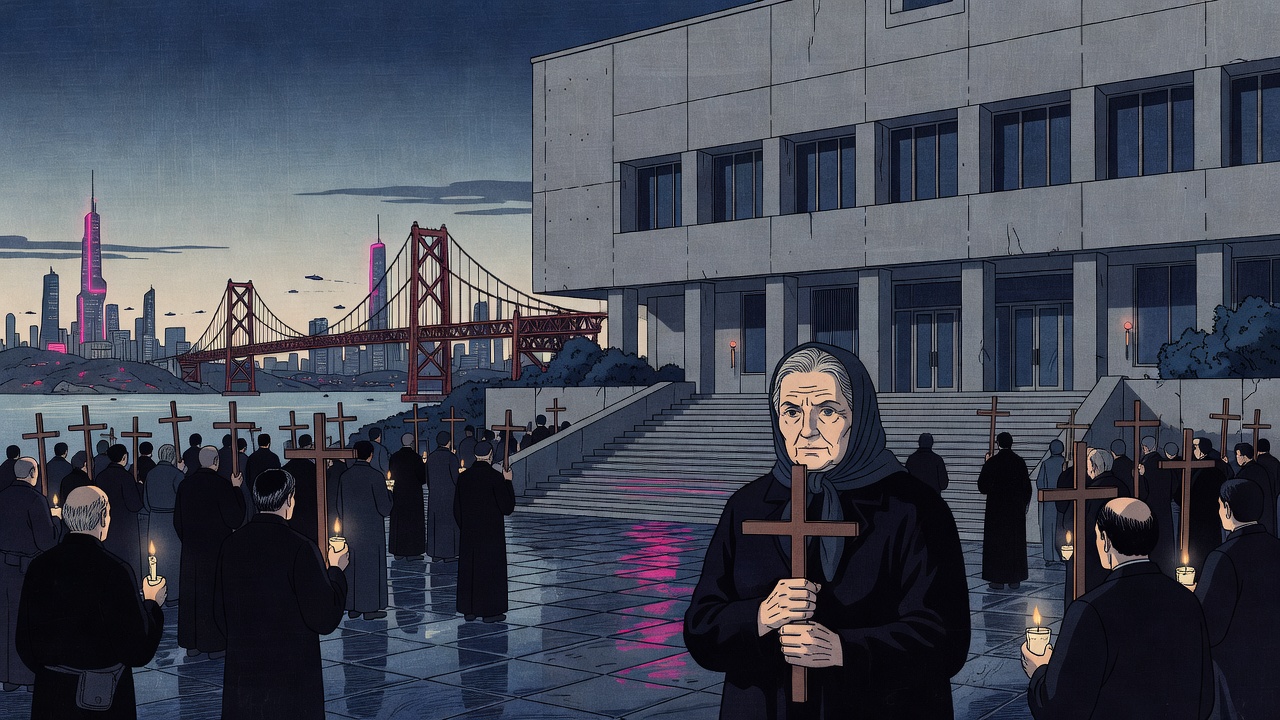
Earth is the seat of the Protectorate, and in Altered Carbon it is Bay City, the old San Francisco, in the twenty-fifth century, its Golden Gate rusted and dilapidated. Kovacs, home again in the third book, sums the planet up as an immortal elite of the super-rich over a cowed population. That elite are the Meths, after Methuselah, who live for centuries by moving from clone to clone: Laurens Bancroft, 357 years old, whose spare bodies are grown and kept at PsychaSec on Alcatraz; Miriam, three centuries old in her eleventh body; Kawahara, whose clones hang in grey sacks in a stone basilica in Europe. A woman Miriam once beat calls her untouchable, and the book does not prove her wrong.
The case turns on the Catholics. They refuse resleeving, believing the soul has gone, so a murdered Catholic can never be spun up to name the killer. That makes them perfect victims: aboard Kawahara’s airborne brothel, Head in the Clouds, Catholic women can be killed for clients’ pleasure and no witness will ever wake. Resolution 653, before the U.N. court as Kovacs arrives, would let a dead Catholic be resleeved to testify, and Catholics protest it outside Bay City Central. By the Epilogue, word has broken that it is about to be adopted.
Sanction IV
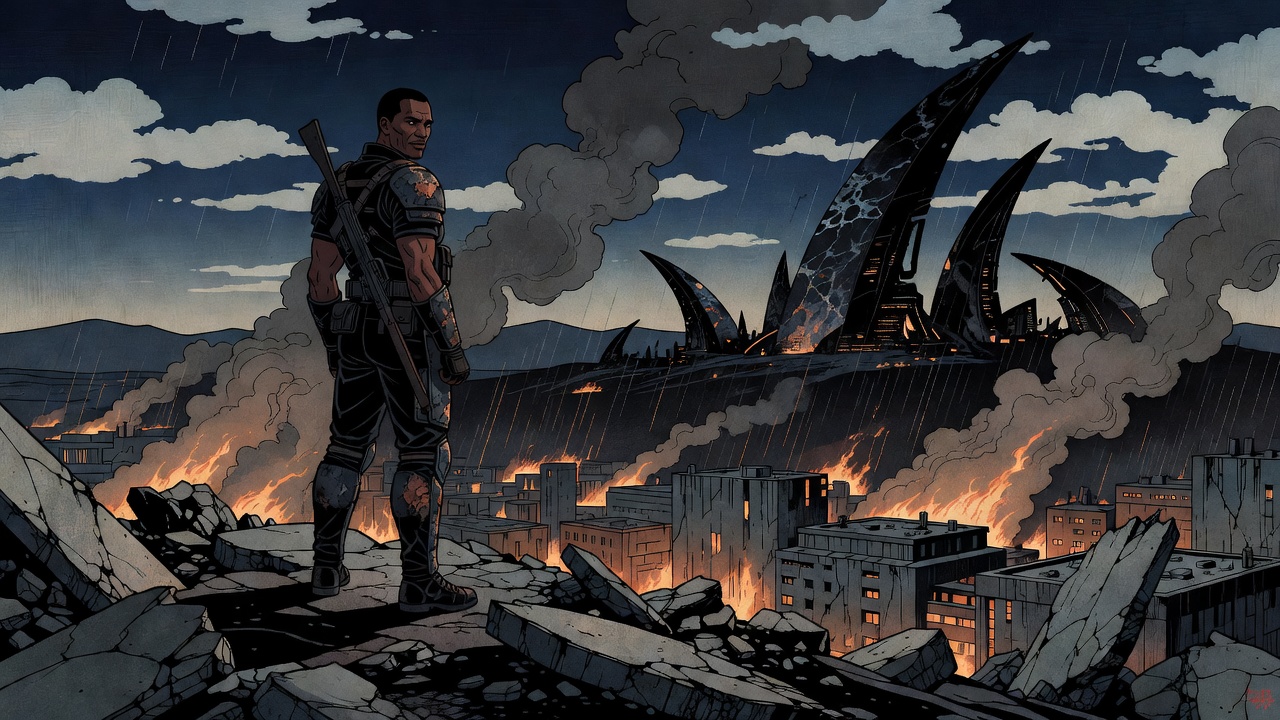
Broken Angels moves the series to a backwater colony in a system where, officially, the Protectorate is absent — the planetary government insists the war is an internal matter — and to a civil war: the Cartel government, its Landfall corporations and hired mercenaries such as Carrera’s Wedge, against the revolution Joshua Kemp raised in Indigo City. Kovacs is a lieutenant of the Wedge, in an Afro-Caribbean combat sleeve.
“War is like any other bad relationship.”
So says the Quellcrist Falconer epigraph that opens the book, and on Sanction IV war is business. A corporate machine intelligence gives even odds that a city will be “tactically reduced” within two weeks, and soon the Kempists airburst a bomb over Sauberville: a hundred per cent casualties. The dead have a price too: at the Soul Market, stacks cut from the bombardment’s dead are sold by the skipload. And the planet is riddled with Martian ruins; on the Dangrek coast beyond Sauberville lies the real prize of the war: the gate.
Harlan’s World
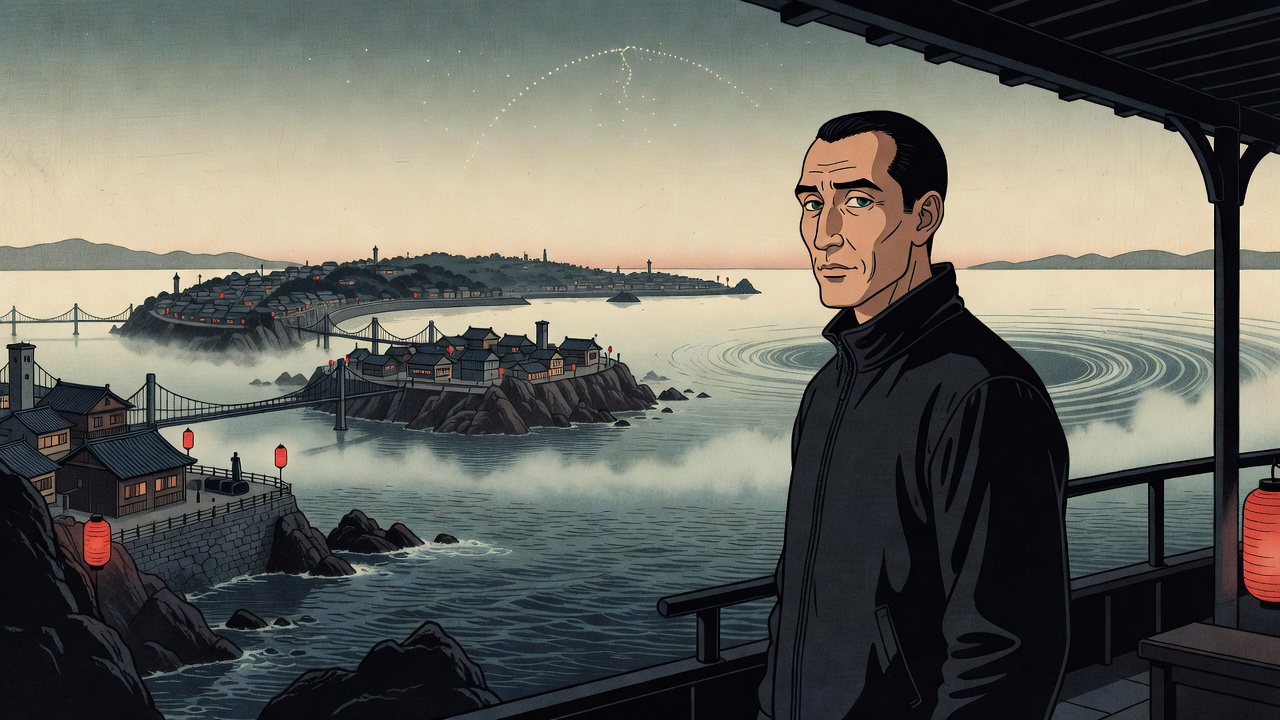
Kovacs’s home is a small planet nine-tenths covered by sea, the only habitable world of the Glimmer system, with three moons: Hotei, Daikoku and Marikanon. Konrad Harlan and his well-connected friends took it a little over four centuries ago, with a Japanese ruling class and an Eastern European labour force, long since mixed; people speak Amanglic and the street argot Stripjap. Kovacs grew up in Newpest, on the southern landmass of Kossuth. Millsport, its metropolis, spreads across the curved rim islands of a volcanic system long extinct and hundreds of kilometres across, around the Reach and its maelstrom. The Harlan family and the First Families rule, and the founder stands everywhere in statue and holosculpture.
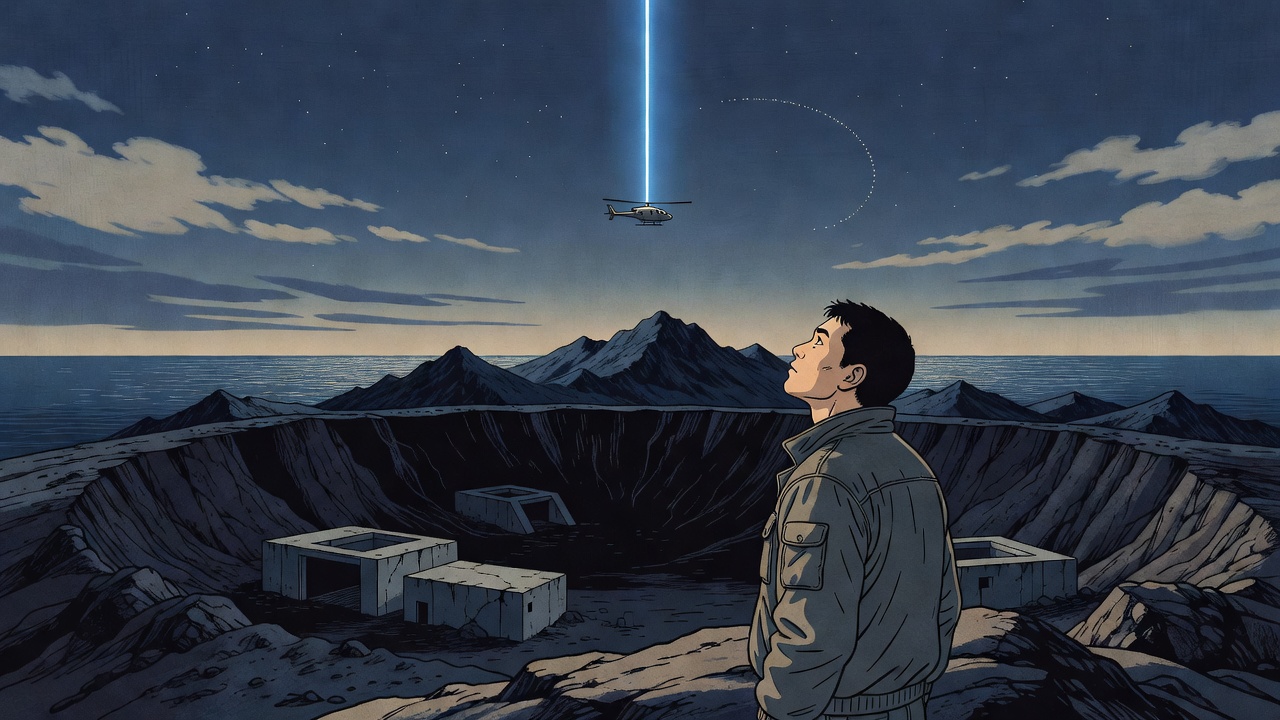
Overhead hang the orbitals, Martian platforms that still work and burn anything flying above a certain height with angelfire. So, as Kovacs says on the first pages of Woken Furies,
“you don’t go up in the air if you can possibly avoid it”
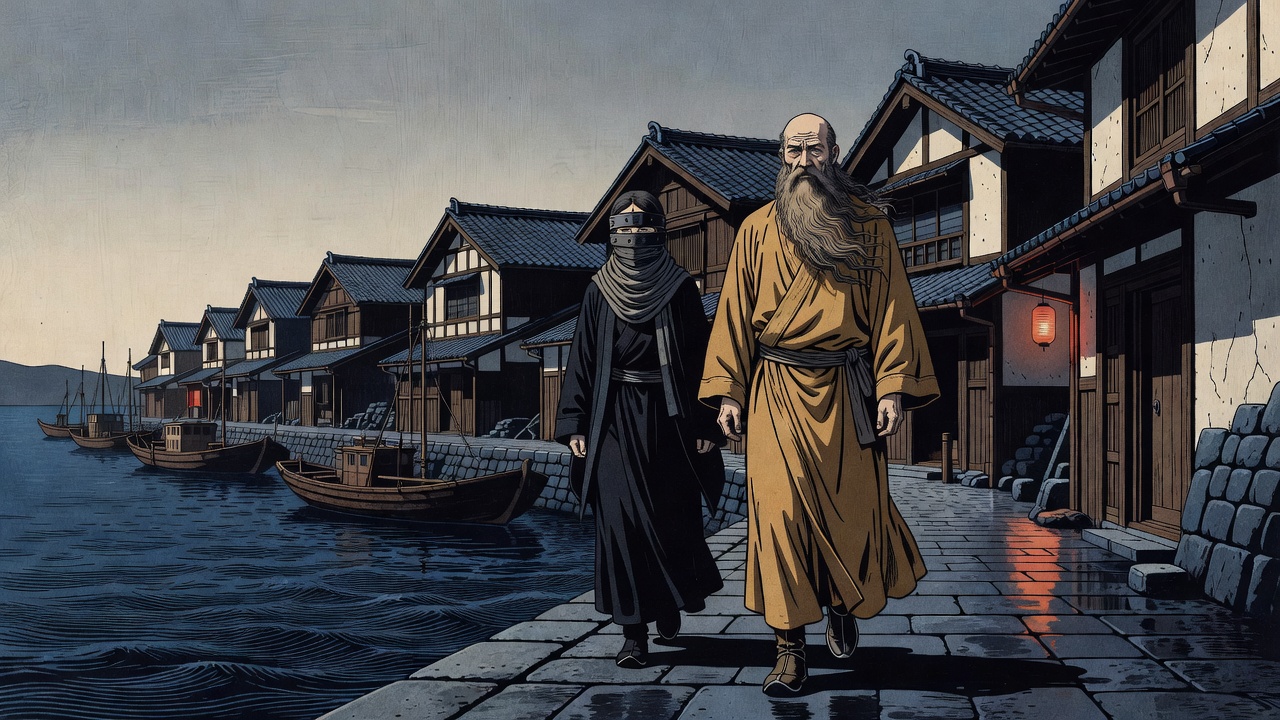
Below, the planet has its yakuza and the haiduci gangs of Kossuth; deCom crews clearing New Hokkaido of self-repairing war machines, mimints, left over from humanity’s own wars there; and the Knights of the New Revelation, bearded, shaven-skulled fundamentalists who keep their women masked and teach that
“a cortical stack must be melted to slag, to cast out the demon it contains”
They caught Sarah Sachilowska trying to get her dead daughter resleeved, cut out both stacks and dropped them in the sea; Kovacs, home from Latimer two years before the book opens, found only her grave. He has been killing their priests ever since.
Quellcrist Falconer
The voice that heads chapters and parts across the series belongs to Nadia Makita, born in Millsport in the year 47 by the Colonial Reckoning: poet, political thinker and, as Quellcrist Falconer, leader of the Quellist rising of the Unsettlement. Her writings — Things I Should Have Learned by Now, the Campaign Diaries, the Speech before the Assault on Millsport — supply the epigraphs, and in Altered Carbon Kovacs knows her verse more or less by heart from school. Morgan traced her politics to Proudhon and Bakunin and called her goal an engaged, high-tech social democracy. The epilogue of Broken Angels reveals that Kovacs went to Sanction IV for the Quellists.
She died, the histories say, in the year 105, fleeing Alabardos in a stripped-down jetcopter that the orbitals burned out of the sky. Her heirs are the neo-Quellists, Vidaura’s Little Blue Bugs among them, and her war left weapons in the ground: by the end of Woken Furies the Qualgrist Protocol, an old Black Brigade bioweapon keyed to Harlan blood, is loose. “Power isn’t a structure, it’s a flow system,” Vidaura tells the Envoy Murakami. The book’s last discovery is what angelfire does: it records what it destroys. A copy of Quell has surfaced in Sylvie Oshima’s head, and the Epilogue leaves the two of them, deep in Sylvie’s command capacity, learning to talk to the orbitals.
At a glance
| Term | What it is | Where it matters |
|---|---|---|
| Cortical stack | The implant at the base of the skull that holds a person as data; it can be cut out, stored, copied and cast between the stars | All three books |
| Sleeve | A body worn by a stack: your own, a clone, a synthetic, a combat model or somebody else’s | All three; Kovacs wears a new one in each book |
| Resleeving | Loading a stack into a new body, usually waking in a tank of gel | All three |
| Real death | Death with the stack destroyed and no backup anywhere | All three; Kadmin and Kawahara in I |
| Storage | Prison as a stack on a shelf, the body rented out or sold | I (Kovacs’s 117 years, Ryker’s 200) |
| Double-sleeving | One mind in two bodies at once; a crime | I (Kadmin; Kovacs himself), III (the young Envoy copy) |
| Synthetic | A manufactured sleeve: cheap, hardy, a little numb | I (Trepp, Carnage), III (Kovacs’s first sleeve) |
| Neurachem | Wetware that speeds a sleeve’s reflexes and senses | All three |
| Virtual | A machine-made world a stored mind can run in, often faster than real time | All three |
| Needlecast | The faster-than-light transmission; people ride it as digitized human freight (D.H.F.) | All three |
| UN Protectorate | Earth’s government of the Settled Worlds | All three |
| Settled Worlds | The human colonies, reached with the Martians’ charts | All three |
| Envoy Corps | The Protectorate’s conditioned elite, made to wake in any body and fight at once | All three; Kovacs is an ex-Envoy |
| Innenin | The Envoys’ disaster on Sharya, where a virus got into their minds | Backstory in all three |
| Meths | The centuries-old rich, living from clone to clone | I |
| Resolution 653 | A U.N. measure letting a dead Catholic be resleeved to testify | I |
| Martians | The vanished winged civilization whose charts, ruins and machines lie everywhere | I (the songspire), II (the gate and the warship), III (the orbitals) |
| Archaeologues | The Guild scholars who dig up and read Martian remains | II |
| Orbitals, angelfire | Martian platforms over Harlan’s World that burn anything flying too high | I (Prologue), III |
| Harlan’s World | Kovacs’s home: an ocean world of archipelagos — Millsport, Newpest, Kossuth | I (Prologue), III |
| First Families | Harlan’s World’s oligarchy, led by the Harlan family | III |
| Quellcrist Falconer | Nadia Makita, poet and revolutionary of the Unsettlement | Epigraphs throughout; III |
| New Revelation | Harlan’s World fundamentalists who would melt stacks to slag | III |
| deComs | Crews clearing New Hokkaido of self-repairing war machines | III |
| Sanction IV | A backwater colony at war, full of Martian ruins | II |
| Carrera’s Wedge | The mercenary force Kovacs fights for on Sanction IV | II |
Notes
- What the Netflix series changed. The show makes Quellcrist Falconer (Nadia Makita) the inventor of stack technology and the leader of the Envoys, who become rebels against the Protectorate rather than its enforcers, with Kovacs their last survivor. Its Martians are the “Elders”: season 2 keeps one alive and drops the link to Mars. The orbitals become the “Angels”, the Protectorate’s soldiers are CTAC, Kawahara becomes Kovacs’s sister and the Hendrix becomes the Raven, run by an Edgar Allan Poe AI. The full comparison is on Books vs. the series.
- Timeline. Altered Carbon is set in the twenty-fifth century; Broken Angels comes about thirty years later (Wikipedia’s reckoning) and Woken Furies, Morgan said, about thirty years after that — though in Woken Furies Kovacs calls his memory of Earth “getting on for a century out of date”. Kovacs’s own lived years lag far behind the calendar, after long spells in storage and virtual. Harlan’s World keeps a Colonial Reckoning of its own, in which a month can run to a thirty-third day.
- How it was built. Morgan said in 2002 that he had been working on the background since the early 1990s — Harlan’s World, the Martians and the human diaspora first — and that the Meths were invented on the spur of the moment for the Bancrofts. In 2020 he said he kept the Martians deliberately absent and mysterious.
- Spellings. The British text of Broken Angels has “digital human freight”, the American “digitized”; the virus of Innenin is the Rawling virus, not “Rawlings”.